
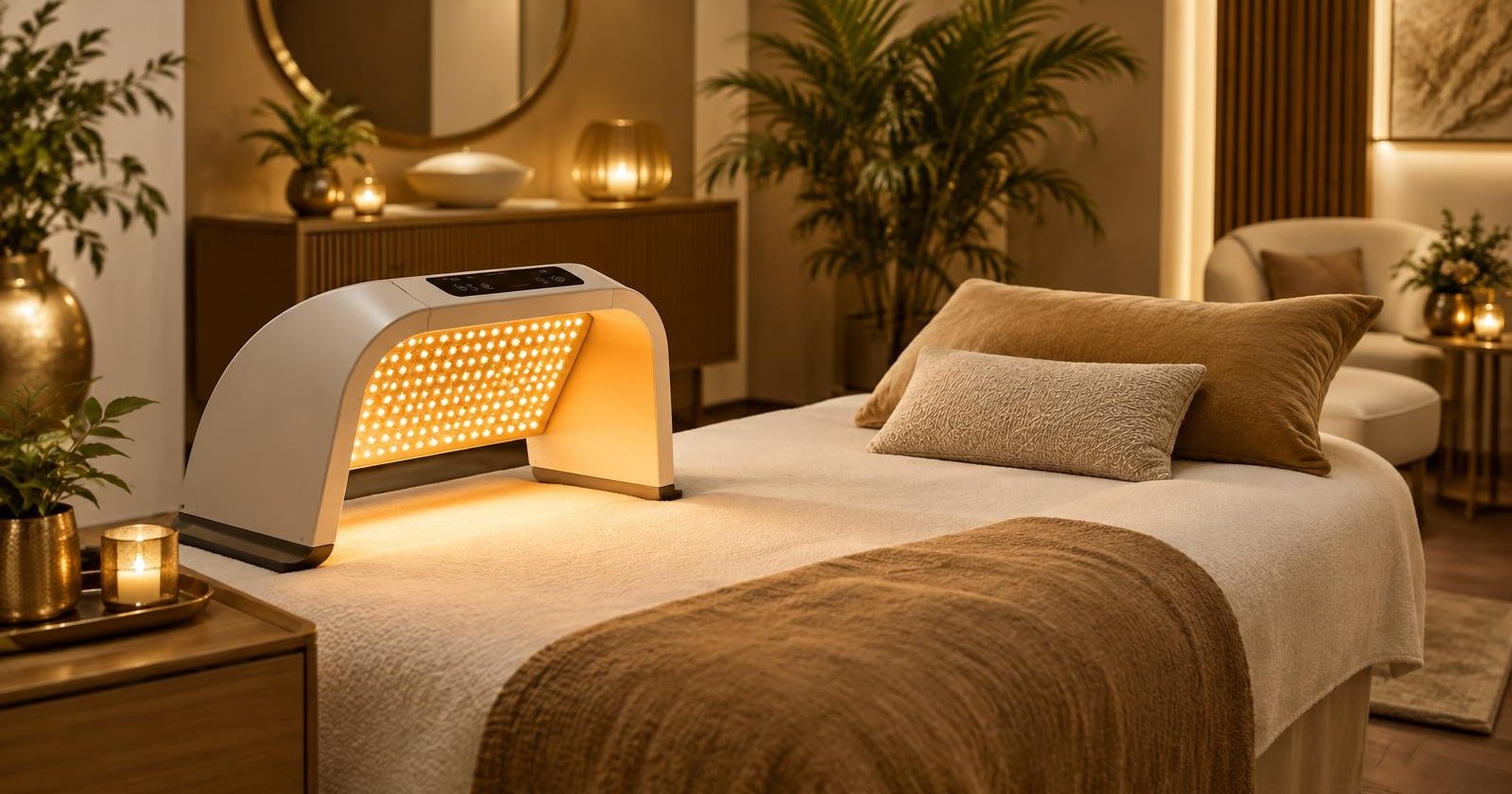
Choosing the Right LED Light Therapy Session
If you’re considering LED light therapy for breakouts, redness or fine lines, start with the change you most want to see. The right session pairs a light type suited to that concern with a provider who can explain the device, treatment settings and safety precautions.
Your plan should account for more than the concern itself. Skin sensitivity, your skincare routine and medicines that increase light sensitivity can all affect suitability. Ask who will assess your skin, why they recommend a particular light, and how they choose session length and frequency. You should understand what improvement is realistic and when progress will be reviewed. Look for a clear treatment goal and a plan guided by your response, not a promise of results after one visit.
Understanding Types of LED Light Therapy
Matching your treatment goal to the right LED session starts with understanding what each colour does. Red, blue and yellow light target different processes in the skin, so the choice depends on what is contributing to your concern.
Red light: collagen support
Red light at wavelengths of 630 to 660 nm reaches into the dermis, where it stimulates collagen production. This makes it relevant to fine lines and loss of firmness, although the degree of improvement varies and wrinkles should not be expected to disappear.
Red LED light therapy may also reduce inflammation. This gives it a potential role beyond treating visible signs of ageing, depending on the condition being treated.
Blue light: bacteria and oil activity
Blue light targets acne-causing bacteria and may help reduce excessive oil production. It can be useful when these factors contribute to breakouts, but not every type of acne will respond equally.
Ask your practitioner which part of your acne treatment plan blue light is intended to support. The recommendation should reflect what is contributing to your breakouts, rather than treating all blemishes as the same problem.
Yellow light: redness and recovery
Yellow light is used to reduce redness and inflammation and support recovery after treatments such as lasers, peels or injectables. Its role is supportive; this does not mean every post-treatment irritation is suitable for LED treatment. The practitioner managing your recovery should confirm whether yellow light fits your aftercare plan.
Selecting the Right LED Light Colour for Your Skin Concerns
Choose between these light types by identifying the change you most want from LED light therapy: fewer inflamed spots, softer fine lines or less visible redness. If concerns overlap, ask your practitioner which to prioritise. A colour described as suitable for your skin type may not address your main concern.
For fine lines and loss of firmness, consider red light. Its role in collagen support makes it more relevant to early signs of ageing than to some other concerns. Be specific about what you want to improve: fine lines and skin texture are different treatment goals from pigmentation or deeper folds. Ask which changes the proposed treatment can reasonably address.
For inflammatory acne, consider blue light. It may help with mild to moderate inflamed breakouts. Blackheads, deep painful nodules and marks left after spots need a different assessment; blue light alone may not adequately address them. If breakouts occur alongside irritation, your practitioner may consider red and blue light together, depending on your skin’s condition.
For redness, ask about yellow light, but clarify the cause first. It is used to help reduce redness and inflammation, although evidence is less established than for red and blue light. Persistent flushing, stinging or a new rash should not automatically be treated as a cosmetic concern.
Skin tone and sensitivity also matter. Tell your practitioner if irritation tends to leave dark marks or your skin reacts easily. These details should guide the choice of light and treatment settings, not just the colour label. Ask how the proposed wavelength and settings suit your concern and your skin’s response.
Evaluating Local Service Providers for LED Light Therapy
A provider should be able to explain how their equipment and approach suit your skin. Before booking a session, ask for the device’s manufacturer and model, along with documentation of FDA clearance for the intended use. Clearance provides evidence of safety and efficacy for that use, but does not guarantee that treatment will suit you.
Ask for two specifications that help you assess whether the proposed device matches your treatment goal:
- Wavelength: Ask for the wavelength in nanometres and whether it matches values clinically studied for your concern. The provider should be able to give you more than a colour name.
- Power at the skin: Ask about irradiance, or power per unit area, and the distance at which it was measured. Have the provider explain how these measurements relate to your position under the device during treatment.
Check the practitioner’s experience with both the equipment and concerns like yours. Ask what training they have completed, who assesses suitability and when they would refer you to a dermatologist rather than proceed. Look for an assessment that connects your skin history to the proposed settings, rather than a standard protocol applied to everyone.
Ask how equipment is cleaned between clients and what eye protection the manufacturer requires. You should also know how the practitioner will respond if you feel discomfort.
Customer reviews can offer useful detail about consultation quality, cleanliness, communication and follow-up, but they are not proof of clinical results. Before paying for a course, request a written plan setting out the treatment goal, proposed settings and how your response will be reviewed.
How Often to Attend and How Long Sessions Last
Your written plan should set out a schedule suited to your skin and the device. For in-office LED light therapy, expect a series of appointments rather than a single visit if you are seeking significant benefits. A treatment each week for about a month is a common starting schedule, but your provider should confirm whether that frequency suits your concern and the equipment being used.
Ask how many visits are recommended before a review and what would prompt a change in frequency. The plan should distinguish the initial course from any maintenance appointments. If ongoing sessions are suggested, ask why they are appropriate for your skin, rather than assuming weekly treatment needs to continue indefinitely.
Time under the light should also follow the device’s treatment protocol. Ask how many minutes of light exposure you will receive, not just how long the appointment lasts. Consultation, cleansing or another treatment may account for part of the booking, so appointment length alone is not a useful comparison between providers. More minutes should not be the reason to choose one session over another.
For an at-home red-light device, regular use is needed, but treatment time varies: follow the directions supplied with your particular device. Check both the minutes per session and the permitted frequency. Do not copy a clinic schedule or another device’s routine. If you also attend professional sessions, share your home-use schedule with your provider before adding further exposure.
Expected Results and Timelines for LED Light Therapy
Even with a consistent course of treatment, improvements usually develop gradually. You may notice changes within the first month, but treat this as a review point, not a deadline for results. Your starting skin condition, the device settings and your response to treatment all affect how soon progress becomes visible.
Look for changes that match your treatment goal. For acne-prone skin, that might mean fewer new inflamed spots rather than every existing blemish disappearing. For redness, assess whether persistent redness reduces between appointments, not just how your skin looks immediately afterwards. Changes in fine lines or texture may be subtler and take longer to assess. LED light therapy should not be expected to erase deep wrinkles, remove established scars or permanently prevent breakouts.
Give yourself and your practitioner a clear basis for comparison. Take photographs before treatment and at agreed review appointments, using similar lighting and angles, with no makeup. Note changes that photographs may miss, such as how often new spots appear. Record any changes to your skincare routine or other treatments, too. These can affect results and make it harder to identify what is helping.
At your review, ask whether the improvement justifies continuing the current plan. If there is little change after the agreed course, your practitioner should reassess your concern and treatment approach rather than simply recommend more sessions. Benefits may require maintenance, depending on the condition being treated, but should not be presented as permanent. A lack of progress is a reason to review the plan, not a reason to commit to more appointments without reassessment.
Contraindications and Precautions for LED Light Therapy
Suitability needs to be checked before treatment and reconsidered if your health or skin changes during a course. If you have medical concerns, ask your healthcare provider whether your history gives you a reason to avoid LED light therapy or requires additional precautions. Share their advice with your practitioner before proceeding.
Check medicines before booking
LED light therapy is not appropriate for everyone, including people taking certain medications. Bring a complete list of prescription medicines, over-the-counter products and supplements. Give exact names rather than descriptions such as “acne treatment” or “antibiotic”, so each product can be checked.
If you have medical concerns, ask a healthcare provider whether you can proceed with LED therapy. Do not stop prescribed medication to make treatment possible. If the answer remains unclear, postpone your session until your healthcare provider has confirmed whether you can proceed.
Report discomfort and changes in your skin
The most common side effects of red light therapy are mild, but some people experience temporary mild pain or irritated skin. Tell your practitioner if you feel discomfort during treatment; you do not need to tolerate it. Before leaving, ask what reaction to expect and whom to contact if symptoms persist or worsen.
Before your appointment, ask which skincare products to use or pause around treatment. At later sessions, report any changes in medication, health or skin condition before treatment begins. An earlier assessment should not replace checking whether the plan still suits you.
Frequently asked questions
Can LED light therapy be combined with other skincare treatments?
Yes, provided each treatment has a clear role in your skincare plan. For acne, prescribed or topical care may still be needed because light does not address every cause of breakouts.
If you are planning a peel, microneedling, laser treatment or injectables, ask the practitioner responsible for that procedure to confirm whether LED is appropriate and how to time it. Request a coordinated aftercare plan, particularly if you see more than one provider, so you are not left with conflicting instructions.
Is at-home LED light therapy as effective as professional treatments?
An at-home device may offer benefits, but it will not necessarily match professional treatment. Equally, a clinic device is not automatically better than a home device. Compare evidence for the specific device and your skin concern, and check whether the tested protocol reflects how you would use it.
Professional LED light therapy typically requires a series of in-office treatments to see significant benefits. Home treatment relies more on consistent, correct use, so consider whether the device is practical for your routine as well as suitable for your concern. Before buying, check that it covers the intended treatment area, fits comfortably with the required eye protection and comes with clear operating and cleaning instructions.
Book a consultation before committing to a course
If you are weighing up home treatment and professional sessions, start with an assessment rather than a package purchase. Before your LED light therapy consultation, write down the skin change you most want to see. Bring your skincare routine, medication list and details of recent procedures so the practitioner can consider them together.
The consultation should leave you clear on why the proposed treatment suits your concern, what the initial course involves and when progress will be reviewed. Be open about your budget and appointment availability before agreeing to a plan. These practical limits belong in the discussion, not after you have committed to a course.
For specialist-guided advice in Cape Town, contact Skin & Hair Bar to arrange a consultation. The first step is to establish whether treatment is appropriate for your skin, with time to ask questions and no pressure to proceed.
For personalised advice on choosing the right LED light therapy session tailored to your skincare needs, please reach out to us at Skin & Hair Bar to book a consultation.
Powered by Rankchat